


Floating Infrastructure Solutions for Rising Sea Levels: Civil Engineering's Response to Climate Change.
Climate change and its associated impacts have long moved from the realm of scientific prediction to an evident reality. Rising sea levels, a direct consequence of melting ice caps and expanding warmer oceans, pose a critical threat to coastal cities and low-lying areas. As these waters rise, civil engineering faces the challenge of crafting solutions to mitigate the impending inundation. Enter floating infrastructure – a revolutionary concept that blends innovation with adaptability.
The Necessity of Floating Infrastructure
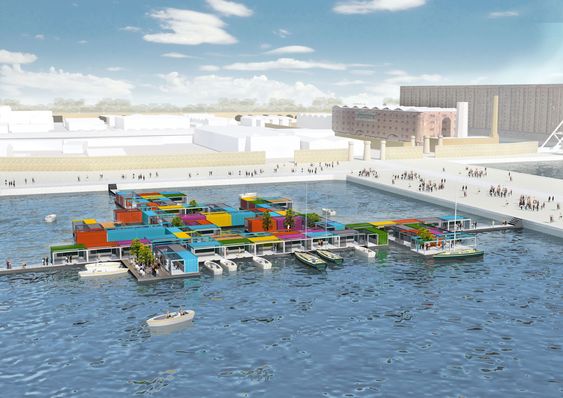
Historical cities, rich in cultural heritage and population density, often reside along coastlines. With the looming threat of submergence, relocation isn't always a feasible solution due to socio-economic, political, and historical factors. Hence, there's an urgent need to find innovative methods that allow these cities to coexist with rising waters.
Floating infrastructure provides a solution that doesn't fight against nature but rather works in tandem with it. By designing structures that can float, cities can continue to thrive even amidst changing water levels.
Pioneering Examples of Floating Infrastructure
Several projects around the globe already exemplify the benefits and feasibility of this approach:
- Floating Homes in The Netherlands: The Dutch, due to their country's low elevation, have historically been at the forefront of innovative water management. In cities like Amsterdam and Rotterdam, floating homes anchored to flexible moorings are a common sight. These homes rise and fall with water levels, ensuring they remain unaffected by floods.
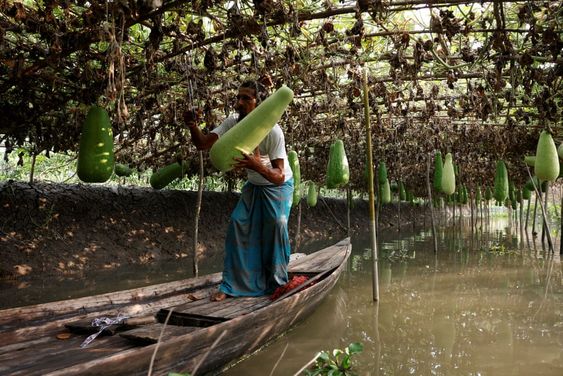
- Floating Farms in Bangladesh: In response to frequent flooding, farmers in Bangladesh have adopted floating gardens. Using water hyacinth as a base, they create rafts upon which they grow crops, ensuring food production even during flood seasons.
- Norway's Floating Tunnels: To traverse its numerous fjords, Norway is exploring submerged floating tunnels. Anchored to the seabed with pontoons, these tunnels would be more cost-effective than traditional bridges and unaffected by sea level changes.
The Engineering Behind Floating Infrastructure
The idea of floating infrastructure isn't just about making things buoyant. It requires sophisticated engineering solutions:
- Stability: Ensuring structures remain stable and don't topple due to imbalances is crucial. Engineers achieve this through careful weight distribution and using stabilizing platforms or deep water anchors.
- Mobility vs. Anchorage: While some floating structures might need to move (like boats), others, like homes or farms, require anchorage to prevent them from drifting.
- Utilities and Services: Providing electricity, sewage, water, and other utilities to floating structures necessitates innovative solutions like flexible utility connections and decentralized systems.
Challenges and Criticisms
While floating infrastructure offers a promising solution, it isn't without challenges:
- Ecological Impact: Anchoring structures can disrupt seabed ecosystems. Moreover, floating infrastructure can impact water currents and quality.
- Cultural Resistance: Traditional communities may resist adopting floating lifestyles, viewing them as a departure from their historical way of life.
- Economic Implications: Initial investment for such projects can be high, making it a potential deterrent for some regions.
The Road Ahead
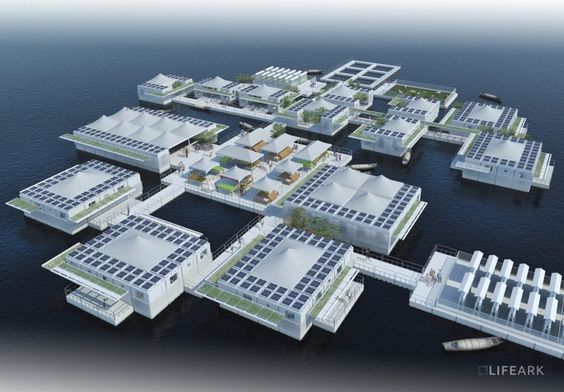
While floating infrastructure might not be the sole answer to the challenges posed by rising sea levels, they're undoubtedly a significant part of the solution matrix. With advancements in technology and materials science, their feasibility and efficiency will only improve.
In a rapidly changing world, adaptability is key. Floating infrastructure exemplifies human ingenuity's ability to evolve and adapt in the face of existential threats. As civil engineering continues to innovate, it fortifies our stance against climate change, turning rising tides into opportunities for sustainable growth.
In conclusion, the fusion of nature's challenges and human innovation is leading to the dawn of cities that float. As sea levels continue their upward trajectory, so too does our spirit of resilience and adaptability, buoyed by groundbreaking feats of engineering.