

The financial sector, historically governed by numbers and data, is undergoing a transformative shift thanks to the integration of advanced technologies. Among these, Machine Learning (ML) stands out as a game-changer, particularly in the realm of financial forecasting. By leveraging ML, financial professionals can glean deeper insights, make more accurate predictions, and drive strategic decision-making.
The financial sector, historically governed by numbers and data, is undergoing a transformative shift thanks to the integration of advanced technologies. Among these, Machine Learning (ML) stands out as a game-changer, particularly in the realm of financial forecasting. By leveraging ML, financial professionals can glean deeper insights, make more accurate predictions, and drive strategic decision-making.
Machine Learning Unveiled:
Before diving deep, it's crucial to understand machine learning. At its essence, ML is a subset of artificial intelligence (AI) that empowers computers to learn from and make decisions based on data, without being explicitly programmed for the task. By ingesting vast datasets, ML algorithms can identify patterns, correlations, and anomalies that might escape human analysis.
The Convergence of Machine Learning and Financial Forecasting:
Enhanced Accuracy: Traditional financial forecasting relies on static models, which can't adapt to changing conditions. ML models, conversely, continually learn and refine themselves, leading to more accurate predictions.
Real-time Analysis: The speed of ML allows for real-time data processing. In the fast-paced world of finance, having instant insights can be a significant competitive advantage.
Risk Management: ML can sift through enormous amounts of data to identify potential risks, allowing businesses to take proactive measures.
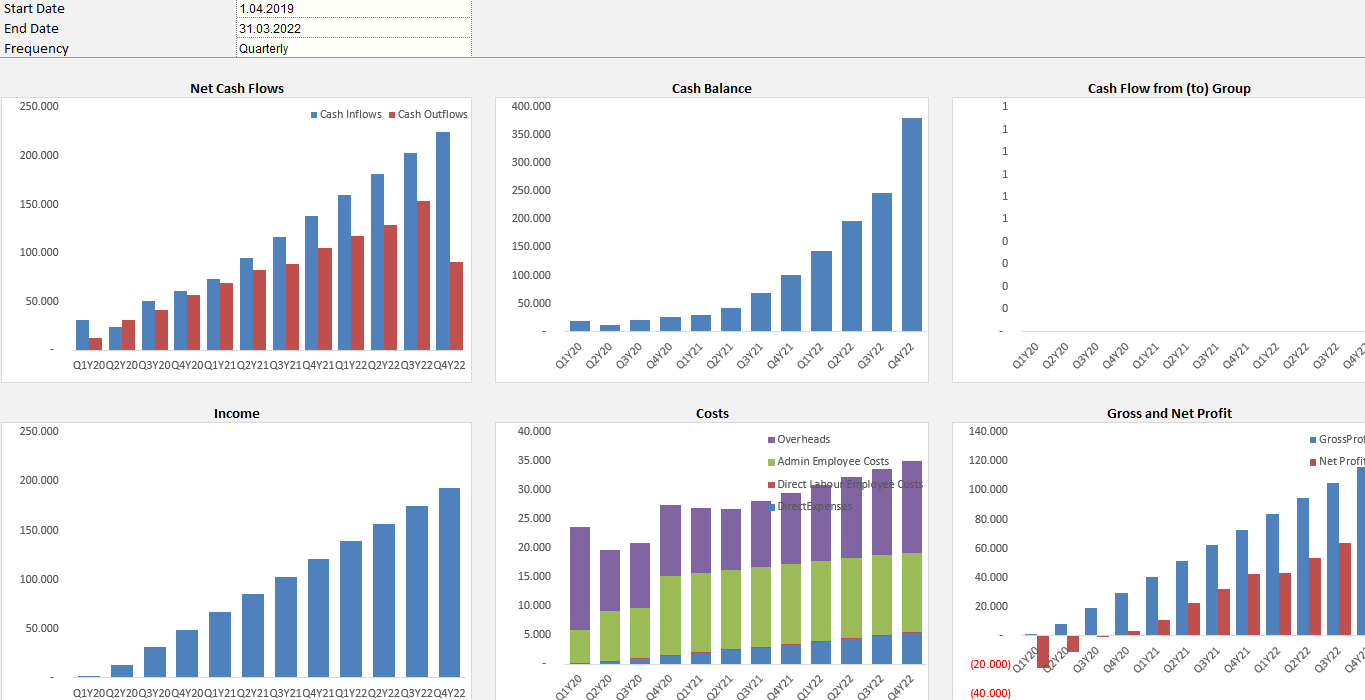
Applications of Machine Learning in Financial Forecasting:
Stock Market Predictions: ML algorithms analyse market trends, global events, and historical data to forecast stock market movements.
Credit Scoring: By analysing a more extensive range of variables than traditional methods, ML can predict the creditworthiness of individuals with higher precision.
Fraud Detection: ML can identify unusual patterns in transaction data, enabling quicker detection of fraudulent activities.
Algorithmic Trading: Advanced ML models can execute trades at superhuman speeds based on a multitude of factors, ensuring optimal returns.
The Challenges and Considerations:
While ML offers a plethora of advantages, it's not without its challenges:
Data Quality: ML models are only as good as the data fed into them. Inaccurate or biased data can lead to misguided forecasts.
Overfitting: If an ML model is too complex, it might perform exceptionally well on training data but fail in real-world scenarios.
Explainability: ML predictions, especially those from deep learning models, can sometimes be hard to interpret, making it challenging for stakeholders to trust and act upon them.

Looking Ahead: The Future of ML in Financial Forecasting
As technology evolves, the integration of ML in financial forecasting is set to deepen:
Personalised Banking: Imagine a world where your bank understands your spending habits, investment inclinations, and financial goals, offering personalised advice through ML-driven insights.
Quantum Computing: As quantum computing becomes mainstream, the data processing capabilities for ML will skyrocket, leading to even more refined financial predictions.
Integration with Other Technologies: The convergence of ML with other technologies, like blockchain or augmented reality, can create a multifaceted financial landscape enriched by data from diverse sources.
Conclusion:
The realm of finance, characterised by its intricate web of data and numbers, finds a natural ally in machine learning. The ability of ML to dive deep into datasets, identify patterns, and make predictive insights heralds a new era in financial forecasting. While challenges persist, the roadmap ahead is clear: a financial world where decisions, strategies, and forecasts are driven by the unparalleled insights offered by machine learning.