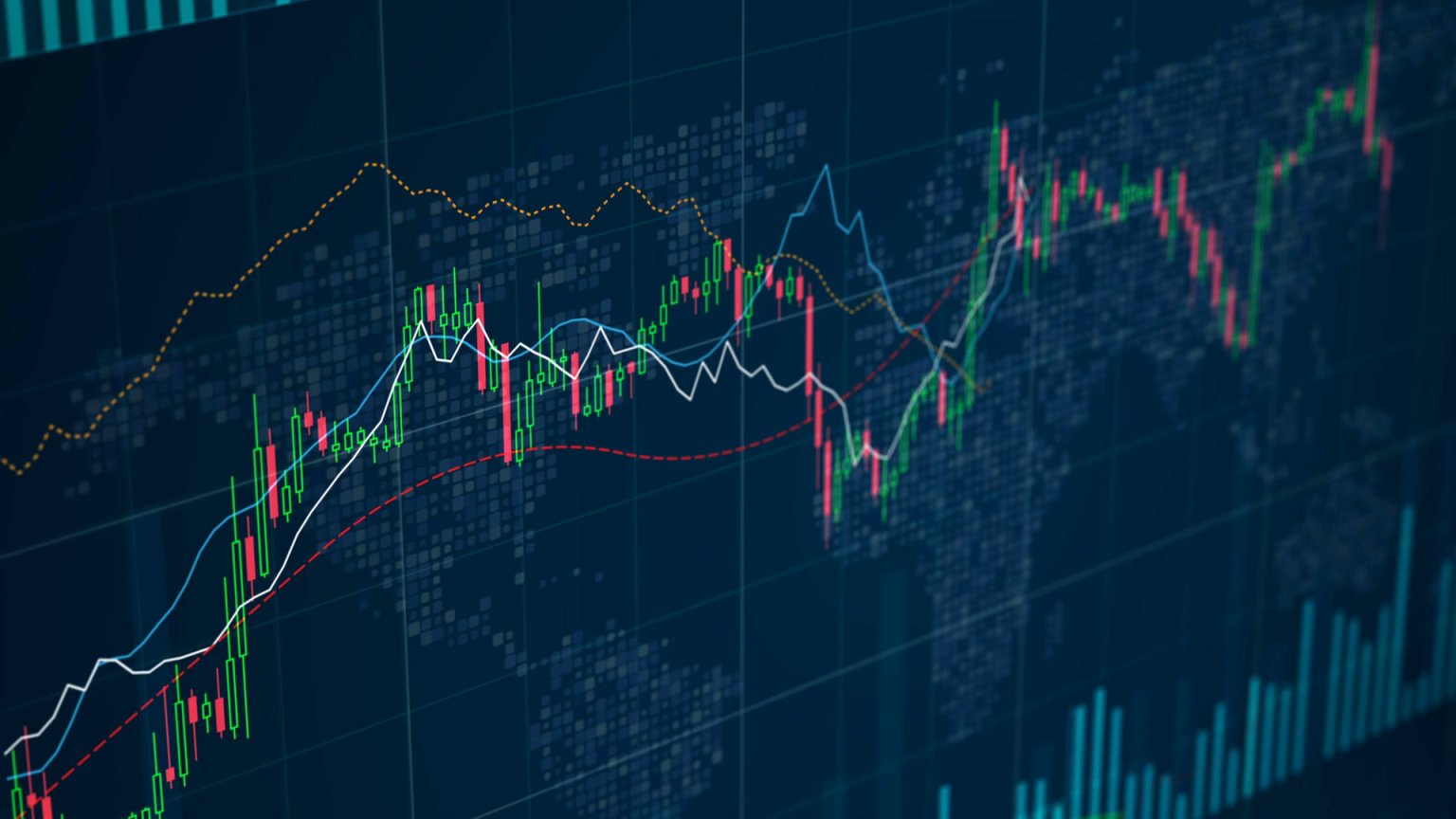
Time Series Analysis: The Power of Predicting Future Trends from Past Data
The ability to examine past trends to forecast future ones is crucial in a world driven by data, and Time Series Analysis (TSA) serves as the key to unlocking this potential. This technique, fundamental for any data analyst, proves vital in sectors like finance, healthcare, and information technology, allowing professionals to make informed decisions and develop strategic approaches.
The ability to examine past trends to forecast future ones is crucial in a world driven by data, and Time Series Analysis (TSA) serves as the key to unlocking this potential. This technique, fundamental for any data analyst, proves vital in sectors like finance, healthcare, and information technology, allowing professionals to make informed decisions and develop strategic approaches.
Introduction:
Time Series Analysis is a statistical technique that deals with time series data, or trend analysis. Time series data are data points collected or recorded at a regular time interval. Analysing this data can unveil patterns, trends, cyclicality, and other structural elements of the data, providing profound insights into the underlying processes.
Importance of Time Series Analysis:
Time Series Analysis is essential for various reasons. It aids organisations in understanding past behaviours and identifying patterns, facilitating the forecast of future values of any series of data. Such insights are crucial for making strategic business decisions, improving performance, and driving innovation.
Components of Time Series:
Time series data typically consist of four components:
Trend Component: It reflects the long-term progression of the series.
Seasonal Component: It depicts regular fluctuations or patterns occurring in a series in a specific period.
Cyclic Component: It represents the rise and fall observed in a series over indeterminate periods.
Irregular Component: It consists of the random variations in the series.
Application of Time Series Analysis:
The applications of Time Series Analysis are multifaceted, sprawling across diverse domains:
Economic Forecasting: TSA is widely used in economics to predict future economic activity levels, interest rates, and stock prices.
Sales Forecasting: Companies utilise TSA to anticipate sales and adjust their strategies to align with market demands.
Environmental Studies: TSA assists in analysing environmental parameters over time, aiding the detection of anomalies and identifying trends.
Healthcare: TSA helps in predicting the outbreak of diseases and assists in health resource planning.
Methods of Time Series Analysis:
Several methods are employed to conduct Time Series Analysis, and they are generally categorised as either frequency domain methods or time domain methods. These include:
Autoregressive Integrated Moving Average (ARIMA): This model captures the autocorrelation in the data, making it suitable for forecasting when data exhibit trends or seasonality.
Exponential Smoothing State Space Model (ETS): This model is ideal for data with a seasonal pattern, addressing error, trend, and seasonality.
Prophet: Developed by Facebook, Prophet is designed for forecasting with daily observations displaying patterns on different time scales.
Long Short-Term Memory (LSTM): A type of recurrent neural network, LSTM is excellent for sequence prediction problems due to its ability to store past information.
Challenges in Time Series Analysis:
Analysing time series data poses several challenges, including dealing with noise in the data, deciding on the right model, and managing missing values. Handling such challenges necessitates meticulous data preparation, effective model selection, and thorough validation.
The Future of Time Series Analysis:
With the continuous advent of technology and the ever-growing emphasis on data-driven decisions, Time Series Analysis is poised to become even more critical. Developments in machine learning and artificial intelligence are expected to contribute significantly to the advancement of TSA, making it more accurate and comprehensive.
Conclusion:
Time Series Analysis remains a powerful tool, providing invaluable insights and serving as the backbone of predictive analytics. Its ability to analyse and predict trends makes it indispensable across various sectors. The ongoing advancements and integrations in this field are not only enhancing its capabilities but are also making it more pivotal in shaping the future strategies of organisations in an increasingly data-centric world.